Heat is a tense and intelligent crime film that explores the lives of professional criminals and the law enforcement officers who pursue them. Set in Los Angeles, the story focuses on a group of highly skilled thieves led by Neil McCauley, as well as the dedicated police detective Vincent Hanna, whose life revolves around his work. From the beginning, the film creates a dark and realistic atmosphere that reflects the moral complexity of its characters.
Neil McCauley is a disciplined and careful criminal who lives by a strict personal code. He believes in having no emotional attachments that could slow him down if he needs to escape. Neil plans and executes large-scale robberies with precision, and his calm intelligence makes him both dangerous and admirable. However, his desire for control and freedom also isolates him from a normal life.
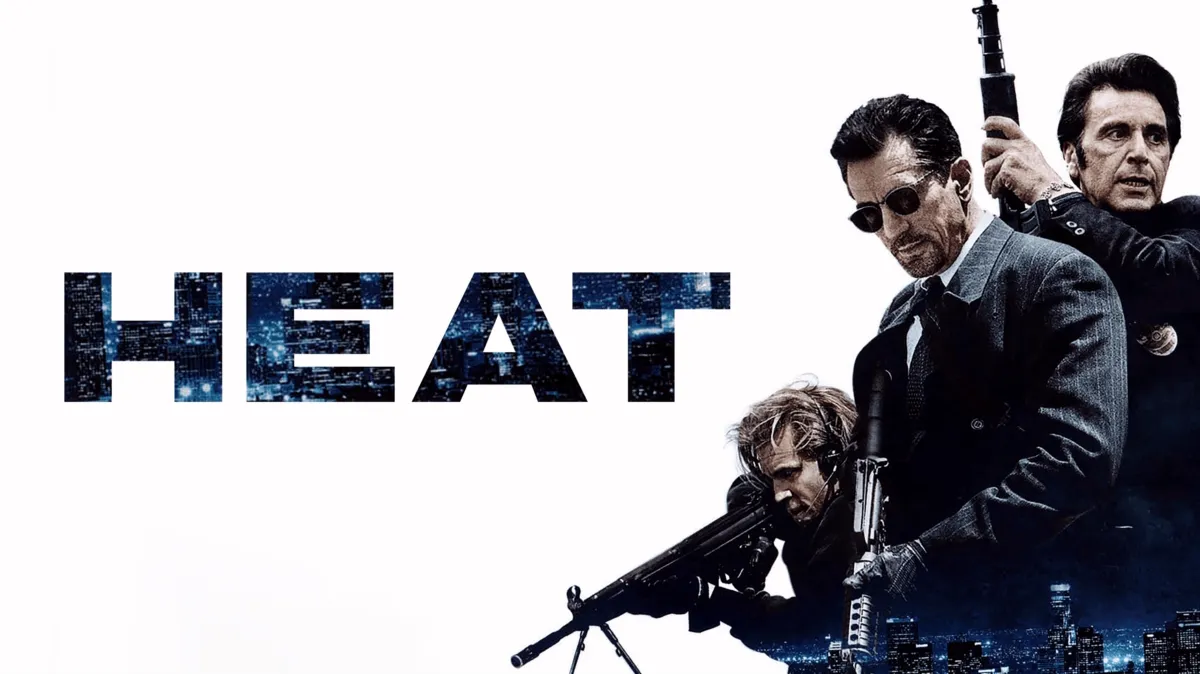
On the opposite side is Vincent Hanna, a relentless detective who is just as obsessed with his job as Neil is with his crimes. Vincent is dedicated to stopping violent criminals, but his intense personality damages his personal relationships. His failing marriage shows the cost of living a life driven entirely by work, highlighting the thin line between commitment and self-destruction.
As the story progresses, the lives of Neil and Vincent begin to mirror each other. Both men are highly skilled, lonely, and defined by their professions. Their famous face-to-face conversation reveals a mutual respect, even though they stand on opposite sides of the law. This moment emphasizes that they are more similar than different.

The film builds toward a powerful climax with a failed bank robbery that leads to one of the most realistic shootouts in cinema history. The violence is sudden and brutal, showing the consequences of the characters’ choices. Each decision made throughout the film leads inevitably toward loss and tragedy.
In the end, Heat is more than a crime thriller; it is a deep examination of identity, obsession, and fate. The film suggests that dedication without balance can destroy personal happiness. Through its complex characters and intense storytelling, Heat leaves a lasting impression on the cost of living by a code, no matter which side of the law one chooses.


